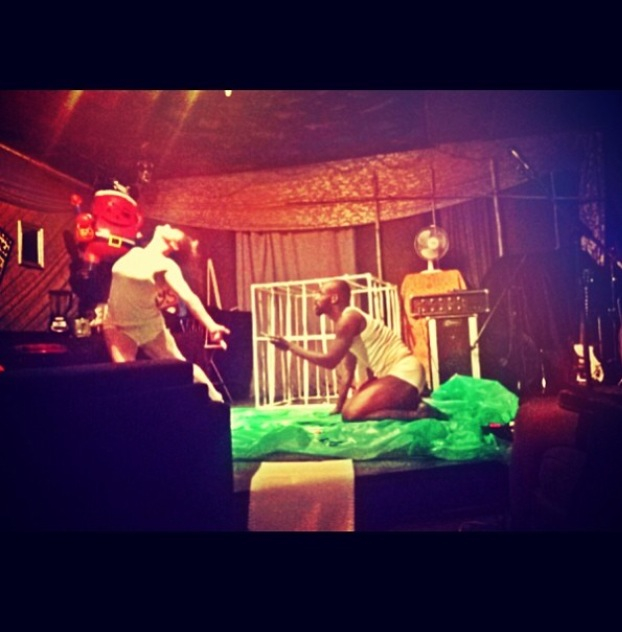
A Thought-Leader In Family & Children’s Dance Classes | Houston, TX
Frame Dance is a thought leader in dance education, inspiring the next generation of movers, makers, and world changers by offering dance classes for adults & children, multi-generational ensembles, professional performances, networking events, and film festivals. We are nestled between West U and the Museum District.
We believe in developing the whole dancer, teaching critical life skills such as creative thinking, leadership, collaboration, and resilience through our artful and playful dance curriculum at our studio and in partner schools.
Our adult modern dance classes are designed to offer you the joy and magic that’s possible when you create space in your life to move, to grow, and to share in the creative process with a like-hearted community.
For more than ten years, Frame Dance has brought radically inclusive and deeply personal contemporary dance to Houston. Led by Founder and Creative Director Lydia Hance, whom Dance Magazine calls “the city’s reigning guru of dance in public places,” the professional company is made up of six acclaimed co-creators committed to collaboration. Frame Dance has created over 50 unique site-specific performances and nine dances for the camera screened in festivals all over the United States and Europe. With an unrelenting drive to make dance in relationship to environment, Frame Dance has created dance works for and with METRO, Houston Museum of Natural Sciences, Houston Parks Board, Plant It Forward Farms, CORE Dance, Rice University, Houston Ballet, 14 Pews, Aurora Picture Show, and the Contemporary Arts Museum. Frame Dance’s productions were described by Arts + Culture Texas Editor-in-Chief Nancy Wozny as “some of the most compelling and entertaining work in Houston.” Creative Director Lydia Hance is a champion of living composers and is dedicated to work exclusively with new music.
Happy Tuesday, Framers! For today’s Tuesday Tunes, we are joined by our very own Lydia Hance!
Tuesday Tunes: Lydia Hance
R: How do you envision the future of dance?
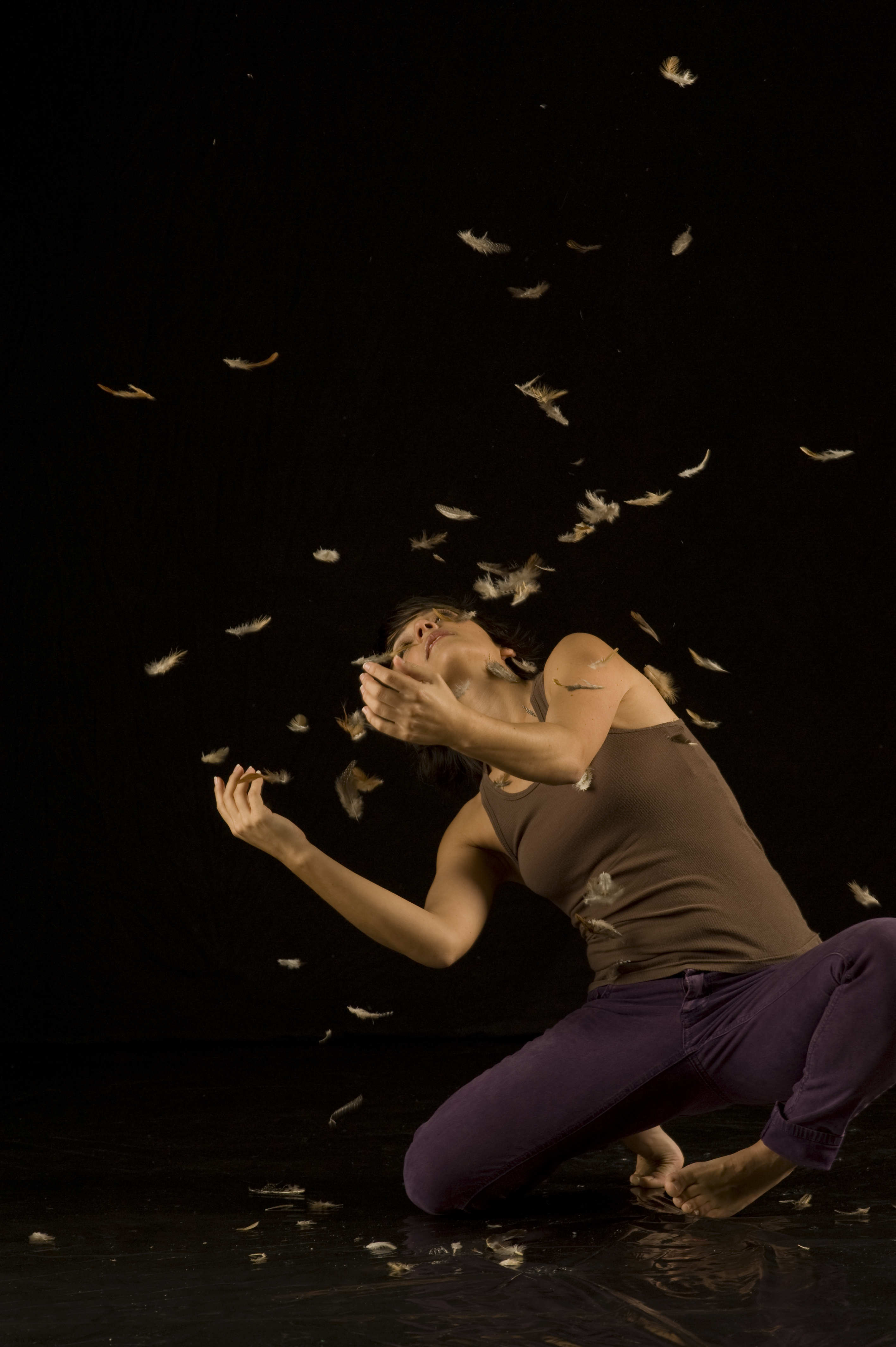
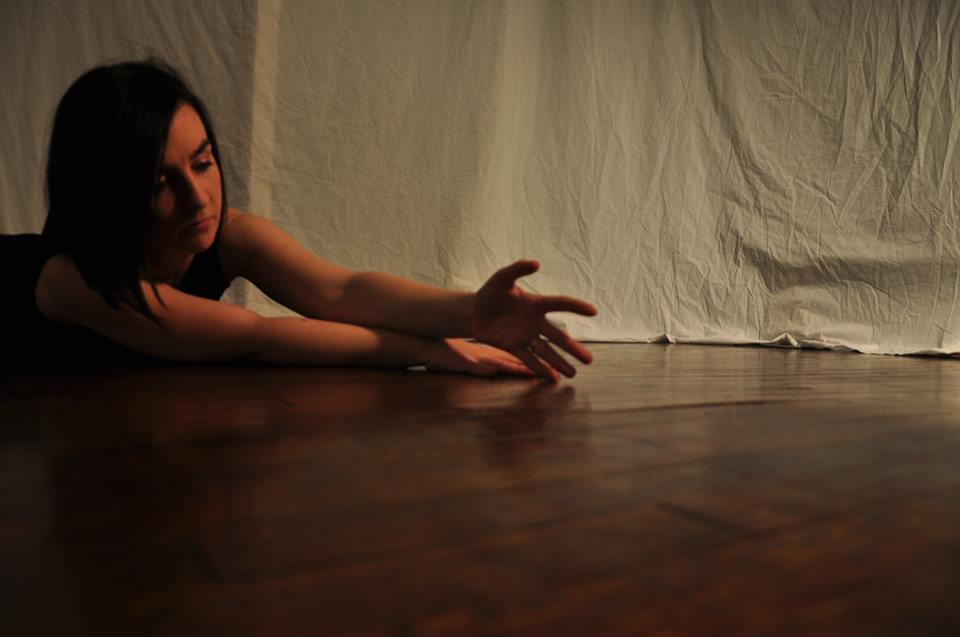
L: I envision the future of dance as being a larger part of everyday life—people “getting it” more. I see people looking at me with understanding instead of confusion when I tell them I am a dance artist. I see the definitions between genres of art continuing to blur and morph. I see dance in every classroom in America, because people will finally understand it’s the perfect synthesis of mind, body, and emotion. And as artists, we have to remember that we’re on the forefront as innovators. We have to approach the world as art ambassadors. It takes time. We have to be confident, humble, and clear. The way things are, we have to make our work, find out how to fund our work and defend our work. It’s hard, it’s exhausting, but it’s the way it is right now. We have to be consistent art warriors to get the future. (photo by Ashley Horn)
R: What has been the biggest dance challenge to overcome, in teaching or performing?
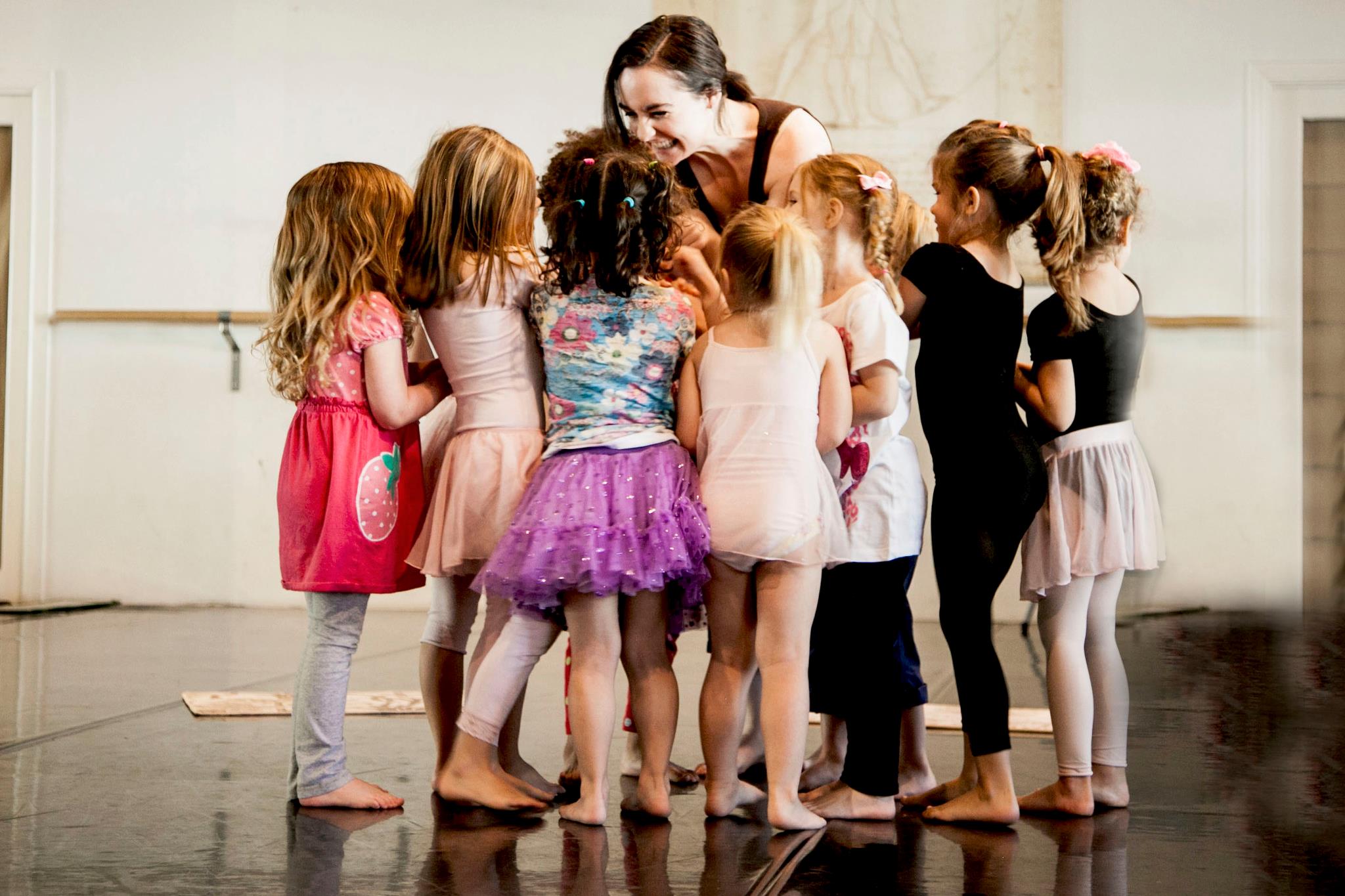
L: My biggest challenge has been my fear of making mistakes. I take the privilege of teaching seriously and that fear was quite paralyzing when I started teaching. But the more I observed great teachers, and the more I learned from teachers who were playful and humble, the more confident I became that it is totally legit (and preferable) to know that you don’t know everything and the classroom is a place for teachers to learn as well.
R: What inspired you to form Frame Dance Productions?
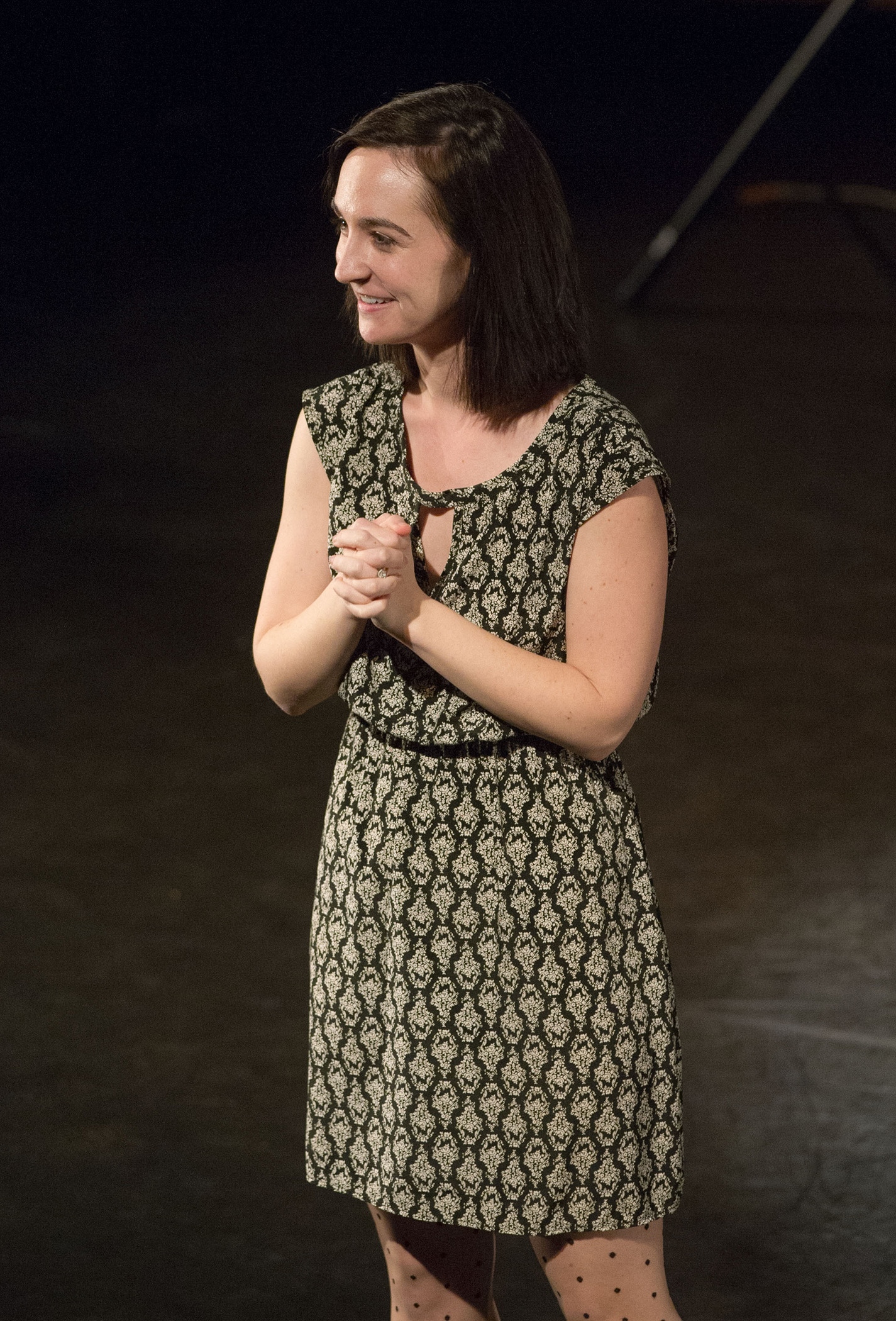
L: Frame Dance Productions was formed out of my desire to connect dance with technology and create collaborative works. I wanted to see culturally relevant, exciting dance that continued to innovate and shed the confines of what everyone expected of a dance company. I wanted to create a context that could evolve and adapt but could remain clear and organized. The moment you stop changing is the moment you go backwards. Just because it’s supposed to work, doesn’t mean it will—and we can create art that changes society from within, it shouldn’t exist outside of the system we’re in.
R: What music do you prefer to use when teaching a class?
L: When I teach I try to make sure there’s a variety of music— from Bach to Bob Dylan, and new American music to traditional Chinese music. I try to make sure not all of my music is in 3’s or 4’s, but that students (and children, especially) learn to hear music in 7’s and 9’s. It is about variety. Children love Rusted Root’s “Send me on my Way” and REM’s “Shiny Happy People.” Then I’ll play some yogic chanting and then some chamber choral ensemble’s work. I’ll use music that spans from new electronic music to Corelli. The music you choose impacts your students immensely. Their ears are young, they haven’t heard all that much. And, unfortunately, it may be a lot of kiddie music (gag.) I used to look forward to ballet class because of how I felt when I danced to a certain piece of music. I was better friends with the pianist than my classmates. Don’t be lazy with your music. Be curious. (Photo by David DeHoyos)
*Interview by Frame Dance’s social media intern, Rachel Kaminiski.
Lydia Hance is the Artistic and Executive Director of Frame Dance Productions (framedance.org), founded in 2010. In the past four years, her work has been performed at the Contemporary Art Museum, Miller Outdoor Theater, Jones Plaza, the Pennzoil Place building, the Photobooth on Montrose, the Port Boliver ferry, Big Range Dance Festival, clawfoot bathtubs, art galleries, and on screens in film festivals all over Houston, Virginia, and Berlin. Before that, her works were performed in San Francisco, Time Square and Malaysia.
In 2012, Hance was named Dance/USA Emerging Leader through acceptance into the Dance/USA Institute of Leadership Training. She has been named a top 100 Creative by the Houston Press and Arts + Culture Magazine dubbed her Houston’s “queen of curious locations.”
From 2012-14 she was the Education Director of Hope Stone, Inc., and she is a curator of Third Coast Film Festival. She graduated magna cum laude from Southern Methodist University with degrees in Dance Performance and English Literature. She trained at the Taylor School, Graham School, Tisch School of the Arts, Limon Institute and SMU.
Framers, hello! I woke up with a case of the Mondays, and the mid-summer blues. But reading this interview of Gabrielle Aufiero by Megan Yankee (who we’ve been blessed to learn from these past few weeks) has pulled me out of my funk. Megan and Gabrielle met and graduated together from Texas Women’s University MFA program and Gabrielle is now is part of Teach for America. There is a LOT of great information here, so please enjoy. –Lydia
Megan: How are you using the knowledge and experiences you gained in grad school now?
Gabrielle: Graduate school taught me many things:
Never allow someone’s help to go uncompensated
Thank you notes are personal and professional
There’s something special about being gritty
1) Giving Back
There were many times in graduate school that I depended on my colleagues for guidance and support. When they chose to take time and energy away from their busy lives to focus on my needs, a simple “thank you” wasn’t sufficient repayment. I learned that people don’t just do nice things for others(and even if they do, don’t they deserve to be rewarded for their genuineness?) In graduate school, I could demonstrate my appreciation with a Starbucks gift card, paper editing, or the appropriate amount of gas money. In the “real world,” gift cards are still valued, gas money is still necessary, and occasionally, something needs editing.
Ultimately, the deal is “if you ask for something of others, you ought to be able to offer them something in return.” All in all, it’ll feel nice to give back. Trust me.
2) Thank You Notes
Do NOT underestimate the value of a well-written thank you note/letter.
During my last year of graduate school, I auditioned for a guest artist position with a Dallas area dance company. Quite a few dancers were selected to guest with the company including myself. This amazing opportunity allowed me to perform in two shows and regularly rehearse with the dancers for over a five-month period. When my time with the group was coming to a close, I wrote my choreographers and the company’s director individualized notes of gratitude. They were professional, but personal. I thanked the company for the experience, and I wrote specifically about the knowledge I gained from the rehearsals and performances. Ultimately, about a month after ending my run with the company, I received an invitation to join them as an official member. When I was invited back, the director commented on how much she appreciated my professionalism both in and beyond the studio.
Similarly, after interviewing for an ideal teaching position, I wrote three individualized thank you notes to the members of the school who had conducted my interview. Being able to personally thank them while expressing my excitement and passion for the position was key. I felt relief after sending the notes. I knew it was just another opportunity for them to be reminded of who I was and how much I cared about the mission of their school. Once again, I was hired.
Although I’m not guaranteeing that a thank you note will land you a job or make you a particular company’s member, I don’t think it hurts your chances.
Thank you notes help to show your passion, gratitude, and drive.
Oh! And BONUS POINTS if you combine a thank you note with an act of “giving back” (see number one for more information).
3) Become Gritty
I never wanted to be a gritty person. In all honesty it sounded kind of grimy and gross. Who wanted to be associated with that connotation? But what I’ve come to learn is that grit is utterly necessary to survive—both in graduate school and beyond it.
Megan Yankee once wrote, “If graduate school is near the top of your list of difficult life experiences, wait until you try to continue making or teaching dance after you graduate without the aid of academia.” She couldn’t be more right. In addition to that sentiment, I’d like to add, “wait until you try to continue dancing without the aid of academia.” You will miss those technique classes, improv jams, rehearsals, and one-on-one training sessions with colleagues. It may seem overwhelming now—especially coupled with your theory classes—but be gritty. It’s worth it. You may not have the opportunity to dance as much in your life directly following graduate school. I definitely don’t.
Using Grit in My Employment After Graduate School
After graduate school, I chose to pursue a career path that wasn’t directly related to dance. I joined Teach For America (TFA) and became a fourth grade reading, writing, and social studies teacher in Dallas, Texas. Although I imagined a future where I could be a certified dance teacher in Texas, I chose to spend two years giving back in field of work that has literally shaped who I am as a person and professional (I mean, I had been in school for 24 STRAIGHT years, and I was only 25 years old.).
When I joined TFA, I signed up for an experience that was all about learning by doing. At that point in my life, I thought I had learning by doing down pat! I mean that’s what dancers do. We go into the studio, and we move. We learn our bodies, movements, qualities, and phrases by practicing over and over and over again. Although TFA offers intensive training and requires that you obtain your probationary certificate before stepping into a classroom, you really learn how to teach through practicing with your own classroom full of students.
There’s no doubt about it—whether in the studio or beyond—learning by doing takes grit. When I made mistakes through TFA, they had repercussions. I had to fix them, and I had to fix them immediately. My students’ futures were on the line. There were a lot of very challenging days and weeks. There were many times when I thought to myself “I can’t do this. Why am I doing this? Why would anyone let me do this?” But it was my life. I was doing it, and it was my responsibility. Walking away wasn’t an option; my kids needed me, even if I made mistakes. So I held my ground. I worked hard. I pushed through, and I made sure my kids knew how much I believed in them and their potential.
Ultimately, I made a choice to put dance on the backburner after graduate school. It was a tough decision. During my roughest times as an elementary school teacher I would cry about how much it hurt to see my greatest passion “vanished” from my life. I mean, I had gone from dancing every day to dancing once a week at best. Sometimes I hated myself for making that decision. I had known what I loved, but I let it go to do something that was hard, frustrating, and at times, unforgiving.
Today, looking back on the roughest times, I’m reminded that the grit I developed in graduate school is what really pulled me through.
I’m passionate about dance. I’m also passionate about teaching. Even with all the rough times, I had so many gratifying days as a teacher I don’t think I could make a bigger difference doing anything else. I love my kids, every one of them! They taught me so much about drive, motivation, perseverance, and myself.
One day, I’d like to combine teaching with dance. For now, I’m still giving back and working on finding a better balance between dancing and teaching in my daily life.
M: Do you have a regular movement practice (even if it’s atypical)?
G: Yes!
I’ve been learning—slowly—how to run, and I hate running. It’s a grueling form of exercise. Every time I do it, I feel like I’m beating my bones into the ground, and I tire out so quickly that it makes me feel inadequate. But, it’s high-intensity, time-efficient, and perhaps most importantly, FREE.
To supplement my practice of hatred (because doing something you hate all the time is sure to send your running body right over the edge of a cliff), I use exercise DVDs—and Netflix, YouTube, and Pinterest links. I’ve done upper fixes, lower fixes, abdominal work, and basically whatever I can to get myself up, moving, and feeling motivated.
I do sun salutations in my living room.
I’ve done barre work on my apartment’s balcony (highly recommended).
Oh! And I’ve been known to dance in the elevator at school. It’s surprising how such a tiny box can inspire such large, extended movement—just don’t jump in it… yeah, that wasn’t such a good idea.
Also, I have company rehearsals a few hours each week. And I teach dance classes.
M: What was your focus in grad school?
G: I originally applied to graduate school because I dreamed of teaching dance in higher education, ideally at my undergraduate university. However, this dream quickly shifted when I began researching adjunct employment opportunities throughout our nation. When I learned about the struggles facing adjunct professors—in terms of salary, benefits, and job security—I knew that becoming an adjunct would not be a feasible option for me at this point in my life. I needed a job that was stable. I needed a guaranteed income so that I could maintain my lifestyle (and pay down student loan debt).
I wanted benefits because my health is something I value.
So imagining a life in which I would earn less than I did as a graduate teaching assistant, not be given benefits, and never know if my classes were even going to fill, made me queasy.
I began researching new employment opportunities, and I started to become interested in K-12 education. I had always worked with children since I was ten (babysitting, nanny-ing, teaching classes at camps, studios, community centers, etc.). I was even teaching children and teenagers dance through a community dance program offered by my graduate dance department. Ultimately, I learned that even with my M.F.A. degree, I would need to receive a teaching certification in the state of Texas in order to teach dance in public schools. This led me to research certification options. Then, I found and bookmarked the website for Teach For America (TFA).
M: What was the job search and application process like for your current position?
G: I am currently a Teach For America (TFA) corps member. When I decided to apply to TFA, I knew a lot about their application process (I had been researching the organization for over a year. I had also been researching other job opportunities since the summer before graduation!). Here are the steps I went through before I was extended an offer to join:
Since TFA offers multiple application deadlines, I could have applied as early as August, 2012. However, I decided to apply for their final 2013 corps deadline, which was in February, 2013.
By a specified date in February, I submitted an online application, resume, and letter of intent through the TFA website.
Approximately two weeks later, I was told that my application had bypassed the phone interview, and I was immediately invited to a final, in-person interview.
After receiving this invitation, I completed a required two-part online activity (This took me approximately two hours.).
By a specified date in March, I sent TFA contact information for two recommenders and a reference person. The recommenders were required to complete an online recommendation form by a certain date. The reference person was only contacted if necessary. All of my recommenders were my graduate professors.
By the end of March, I needed to register for an interview location and date.
In the week leading up to my final interview, I completed a required pre-reading activity and prepared a five-minute lesson to perform (I taught pliés!). I arranged to have my undergraduate and graduate transcripts delivered to TFA. I ensured that TFA had my eligibility documents (You must be a citizen or have permanent resident status to apply.). I also submitted a preference form indicating my preferred teaching regions, grade-levels, and subject areas.
At the beginning of April, I attended my interview! It began early in the morning, and I remember that I completed the interview with enough time to drive back to school and take my favorite technique class. Ha!
Approximately two weeks later, I received my offer! I had two weeks to accept the offer. I accepted within a week.
In May, TFA set up an interview for me with my current placement school. I immediately knew that this school was going to be the perfect fit for me! I was extremely happy when I heard they were hiring me as a fourth grade reading, writing, and social studies teacher.
M: Is there a project you’re itching to get started on?
G: I’ve already started this project, but because it’s still in the initial stages, I’m putting it here! I am currently in the beginning stages of developing an afterschool dance program for my school in Dallas, TX. It’s been a whirlwind of a process! I have done a lot of online research, and most recently I’ve been meeting with some of the colleagues I met in graduate school to discuss the dance programs they’ve been creating, restructuring, directing, and teaching. All of their guidance and support has truly helped me to visualize the potential of my new program. It makes me bubble with excitement just thinking about it! I definitely look forward to working out the details and putting it into action this fall.
PS: If you’ve been helping me with this newest venture, you can anticipate receiving a thank you note and a little something extra.
M: How much are you dancing now in comparison to when you were in school? Reflect.
G: When I was in school, I was dancing everyday. Seriously. There was rarely a Sunday or Saturday when I didn’t dance. It was amazing.
Today, I find myself dancing more because I’m on summer break, but during the school year I was dancing about once a week. It was a rough transition. My personal goal for next year is to ensure that I find a better balance between dancing and teaching.
Gabrielle Aufiero received her Master of Fine Arts in Dance from Texas Woman’s University. She is an emerging dance maker, elementary school educator (Teach For America 2013 corps member), performer, and dreamer of things to come. Currently, Gabrielle dances with Simple Sparrow and co-teaches summer camps at Webb School of Dance in Coppell, Texas. She eagerly looks forward to teaching Kindergarten in the fall and directing/teaching an afterschool dance program for her district. www.gabrielleaufiero.org
Megan Yankee (interviewer, writer, curator on MFA Monday) is an indie dance artist that seeks opportunities to make and present dances in alternative spaces in order to expand the reach of concert dance. She is committed to presenting work and curating concerts in houses, busy street corners, warehouses, dance for film, online and in visual art galleries. She has performed and presented work nationally and internationally at the Nomad Express Multi Arts Festival in Ouagadougou, Burkina Faso produced by Olivier, the Sonic Arts Research Center in Belfast, Northern Ireland, American Dance Festival, American College Dance Festival, Texas Dance Improvisation Festival, Movement Intensive in Composition and Improvisation in Lancaster, PA, Emerge and Exchange Dance Festivals in Tulsa, OK, {254} Festival in Waco, Texas, Out of Loop Festival in Addison, TX, and the Rogue Festival in Fresno, CA. She has had the honor of performing in works by Christie Nelson, Amie LeGendre, Larry Keigwin, Michael Foley, Jordan Fuchs, Sandy Mathern-Smith and Sarah Gamblin.
Megan holds (and runs with) an MFA in Dance from Texas Woman’s University and currently lives in Columbus, OH with her partner, John Osburn and their two dogs, Weecho and Lucy.
Hey Everyone! I hope all of you have exciting plans to celebrate America’s Independence Day! Don’t have any? Don’t worry, check out some of the amazing events that are going on this weekend here in Houston. Go see what events are happening in your neck of the woods this 4th of July and keep coming back for the latest news and events of the Framers!
A Star Spangled Salute
July 04, 2014 at 8:30pm
Miller Outdoor Theatre
6000 Hermann Park Drive, Houston, TX 77030
Enjoy an evening with Principal Pops Conductor Michael Krajewski and the Houston Symphony listening to patriotic, toe-tapping American music. Make sure to stay until the end for the 1812 Overture-complete with booming cannons! This celebration concludes with a magnificent display of fireworks provided by Miller Theatre Advisory Board. As always, open seating on the hill.
Price: FREE!!!
17th Annual Red, Hot & Blue Festival
July 04, 2014 from 6pm-10pm
The Woodlands Town Center
31 Waterway Square Place, Woodlands, TX 77380
This all evening event celebrating the American Dream, will have two locations along the Waterway. Enjoy your Independence Day at both Town Green Park and Waterway Square, each featuring a main stage and activities for all ages.
In addition to live bands, the festivities will also include face painting, games, vendor booths and concessions. But we can’t forget American food staples for the Fourth of July, hot dogs and watermelon! There will be an eating contest for each of these, which are sponsored by HEB.
End the night at the Waterway Square, which will have the best view for the 23-minute fireworks extravaganza.
Price: The Festival is FREE and open to the public!!!
Cocktails & Covers feat Skyrocket! – 4th of July Kick Off
July 04, 2014 at 8 pm
House of Blues
1204 Caroline Street, Houston, TX 77002
Join the House of Blues in their 4th of July celebration featuring the party band Skyrocket.
Price: $17.33
A Thin Wall of Air: Charles James
May 31, 2014 – September 07, 2014 (Recurring daily)
The Menil Collection
1515 Sul Ross, Houston, TX 77006
Artistic, difficult, and imaginative, Charles James was well suited to the eclectic spirit of his most unique patrons and clients, John and Dominique de Menil. As a couturier, Charles James was known for his virtuosic design and construction. His clothes fuse Victorian design approaches with forms derived from nature and are defined by dramatic curves and metamorphic extensions from the body, accentuated by unusual color choices and combinations.
Price: FREE!!!
Francesca DiMattio: Housewares
June 01, 2014 – August 30, 2014
Blaffer Art Museum
120 Fine Arts Building, Houston, TX 77204
For her first solo museum exhibition, Francesca DiMattio will create a new series of painting and ceramics that cut across art-historical genres, historical eras and cultural currents. Her work has been included in exhibitions at the Zabludowicz Collection and Pippy Houlsworth Gallery, London, Conduits Gallery, Milan, Institute of Contemporary Art, Boston, The National Arts Club, New York, LAXART, Los Angeles, The Saatchi Gallery, London, and Locust Projects, Miami. She is represented by Salon 94 in New York.
DiMattio creates intricately layered paintings where objects and figures collide in continually shifting planes. Space and subject are carved out by juxtaposing different swatches of color, pattern, and form into a fragmented but choreographed whole. Likewise, her multi-faceted ceramic sculptures fluctuate between illusionism and abstraction, high art and craft, exploring shifting ideas of beauty, femininity, and art. The exhibition is organized by Claudia Schmuckli.
Price: FREE!!!
U-Pick Blueberries, Strawberries and Thornless Blackberries
June 14, 2014 – July 05, 2014 (Recurring daily) from 8am – 1pm
Blessington Farms
510 Chisolm Trail, Simonton, TX 77485
Gather the family and head to Blessington Farms for a fun time picking fresh, delicious blueberries, strawberries and thornless blackberries. It does not get any fresher than this. The fun does not have to end after picking berries. Also enjoy other farm fun festivities like giant slides, hay maze, pedal cars, chickens, barrel train ride, hay rides, sand mountain and much more. No admission fee for berry picking – just pay for berries picked. Farm Funland is $5 to $8 per person depending on the day. Closed Sundays.
Price: $5-$8
MARVAILLOSSO! A Contemporary Circus
July 03, 2014- July 04, 2014 at 7 pm
Discovery Green
1500 McKinney
Don’t miss the Texas premiere of “ile O” by Barolosolo Cirkus Company, from Carcasonne, France, featuring a mash-up of modern physical theater. Houston’s own Cirque La Vie and FrenetiCore Dance Company also will perform.
Good morning, Framers! The competition on SYTYCD is heating up with the top 20 dancers, and America is so very excited about it. Tell us what you thought about last night’s episode by commenting below.
So You Think You Can Dance: 200th Episode!
Anticipation for this episode just kept building within the SYTYCD fans (including me!) Not only was it the show’s 200th episode, but it was also the first live episode of the 11th season, and with guest judge Jason Derulo.
The 200th live episode kicked off with the top 20 group dance choreographed by Sonya Tayeh. Sonya is one of my personal favorite choreographers who is frequently featured on So You Think You Can Dance, and I absolutely loved the dance! It was dramatic, dark.
The talented 20 dancers were then split into couples and the competition began! Before we watched each couple dance, we got to learn as many fun facts about each dancer that they could cram into eight seconds. First up was dancers Brooklyn and Serge with their energetic cha-cha choreographed by Dmitry Chaplin. In the couple’s eight seconds, we learned that Brooklyn loves popcorn and Serge loves cheese. Judge Mary loved their dance and Serge received compliments from Nigel on all his hard work.
Next up were Emily and Casey with their beautiful contemporary piece by choreographer Travis Wall. Their dance was about a stormy relationship, and with Emily and Casey’s graceful moves, even Jason Derulo was impressed. Some fun facts about these two include that Emily enjoys spearfishing and Casey hates the rain, but loves Disney.
Anthony Morigerato choreographed a tap dance for Valerie and Zac that incorporated the use of stairs to make this dance fun. We also discovered that Valerie loves pigs and Zack loves cereal. (Is this stuff real?)
The second contemporary dance of the night was performed by Bridget and Stanley, and choreographed by Bonnie Story. Bridget adores peacocks and Stanley wants to become a model someday (okaaay.) Their dance was emotional and “authentic”, as complimented by Mary. Dancers Jourdan and Jacque hit the stage for their ballet routine choreographed by Marat Daukayev. The costumes were gorgeous, and their performance looked equally beautiful. Jacque loves ice cream and Jourdan has a pre-med degree (props). This couple was the last to dance before guest judge Jason Derulo took the stage.
Jason hit the stage performing his new single ‘Wiggle’, with rapper Snoop Dogg– super fun and energetic. After his fun song and dance, we hear an announcement about National Dance Day on July 26th. SYTYCD even put together two routines for fans to do on the 26th! One for the more advanced dancer, and one for the beginners!
(Don’t you LOVE the way Adam Shankman is looking at Nigel? So thrilled to be there. But we sure do like that there’s a seated version.)
After a look into National Dance Day, the last five couples hit the stage for the night.
Malene and Marquette are up next with a saucy samba choreographed by Luis Van Amstel. In their eight seconds we find out that Marquette is named after a university and Malene loves chocolate.
Next up, Carly and Rudy as they performed a fantastic contemporary work, by Stacey Tookey. Rudy showed his more serious side as the two performed the emotional piece. One of my favorite dances of the night was a hip hop routine by Christopher Scott, performed by Amelio and Teddy. Amelio gave a special shout out to his hometown Houston, TX! The hip hop duo was perfectly synced and all the judges were impressed, especially Jason. My absolute favorite dance was, of course, choreographed by Sonya Tayeh. The dance tells the story of two people intertwined and connected, with synchronized choreography. Jessica and Ricky performed the dance perfectly and relieved a standing ovation. Nigel even mentioned that if the two remained a couple for the rest of the season they would have “walked away with the entire season.” (I think they call those fighting words?) In the eight seconds we find out that Jessica believes mermaids are real (sigh.)
Last to dance was Tanisha and Nick with their cha-cha by Luis Van Amstel. The dance was cute, but lacking in depth. All of the judges enjoyed the performance despite the lack of connection.
Next week, the bottom three guys and girls will be eliminated from the competition. Make sure you go vote for your favorite dancers to save them from elimination! Vote for your favorite dancers here!
–by Rachel Kaminski, social media intern, Frame Dance
Hey, Framers! We’ve recently decided to add a new layer to our Tuesday column. This fun edition to Tuesday Tunes involves interviewing dance teachers, asking a few questions and what music they enjoy playing during their classes. To start us off with a spark, we’re joined by choreographer, dancer, and teacher, Leslie Scates.
Tuesday Tunes: Leslie Scates
R: Why do you find it important to share your passion and knowledge of dance with others?
L: I find it important to share the work I do in dance with others because it is the primary way that the language and history of dance is transmitted across people and generations. I also really really really enjoy moving with other people…communicating non verbally and sharing real time experiences together.
R: How do you imagine the future of the dance world?
photo by Catalina Alexandra
L: I imagine the future of the dance world to be even more integrated with regard to sharing technique and creativity by way of digital media. I imagine that students will be learning from instructors through screens, allowing for information sharing from distant locations in immediate moments. I imagine that dance will play even more of a role in neuroscience research and public health. I think that the role of movement, dancing movement and creative practices in particular will be integral in helping people with chronic illnesses and rehabilitation from debilitating physical events. I think the neurological benefits of dancing will become more defined, mainstream information and will have applications in many spheres of public wellness and productivity. I also think dance will continue to have traditional techniques passed on and will continue to evolve alongside visual art and performance art and theatre as a separate medium.
R: I know that you travel often- How has your exposure to many cultures influenced you as a dance maker?
L: Being exposed to many cultures has influenced me as a dance maker in the following ways:
* It allows me to experience and observe people in their movement and communication patterns and customs. I get to see alternate ways of organizing social and personal space and time.
* It gives me opportunities to study dance and dance making with people who have trained and worked in different ways than I have. This is essential. Being a student all my life is what makes me stay creative. I want to learn new ways of approaching the same work. I want to be challenged to do things I haven’t done yet.
* I get to be anonymous. When I travel to study and work in dance, no one, or not many people know who I am, what else I do, and what my work is like at home. This gives me ample space to start at zero and work without baggage. I get feedback on my work that is not attached to my history at home.
* I am fully dedicated to that work at that time. Intensives are called intensive for a reason. It is concentrated, condensed time in practice. To be able to focus on being creative and making work fully for days is a brain changer. I come home with a brain full of new patterns. And then I get to share them with other people. Language passing on…
R: In a typical class, what does your music playlist look like?
L: NO MUSIC!!!
Silence is the best sound for training in dance making and improvisational dance. It is because silence allows us to move from our brain and body, not move to one piece of music, or to simply “interpret music through dance”. We must look beyond that for inspiration!!! It is challenging for beginners to dance in silence, but is essential training for post post modern dance. We must be able to create from within, not only from music and sound and external rhythm. If we are creating spontaneous ensemble choreography, silence is useful so that we can focus on composition and listen deeply to the emerging dance, and have time and space to respond to the group’s timing and ideas, and our own instincts.
L: BUT I DO LOVE MUSIC AND WORK WITH IT.
My music playlist is wide. The following are specific musicians or artists that are my go to for Improvisational Dance Classes.
Mike Vargas
Mileece
Dictaphone
Manual
Andy Russ
Bulgarian State Radio Female Choir
Any recorded text on any topic at all
Bach
Mozart
Music in languages other than English
OOIOO
And I like to sometimes vary current pop music because I like to dance and sing at the same time. I only use this kind of music in performance if I want to have a certain effect on an audience by introducing a common and known sound / cultural cliche into the performance.
In my last year of graduate school, I made it a point to try and develop a set personal movement practices that I could take with me after I graduated. This was my best attempt at thwarting the drop-off of creative stimulation that I had heard many of my peers experience once they graduated. I had imagined creating a single perfect set of both biomechanical warm-ups and creative practices that would allow me to remain creatively engaged when I was no longer able to attend the many classes grad school afforded me. I wanted to DEFEAT THE RUT!
The main change in my perspective between then and now is that, in this year since grad school, I realized that I never really needed a single set of exercises. How limiting! Over the course of the year, I began to understand that my body and circumstances had changed so often that doing so would be like trying to fit a square peg in a round hole, and into an oval hole, and in a star-shaped hole, et cetera. I have accepted that there is no way to be engaged with a creative practice that equals that of graduate school. Even a substantial career outside of graduate school is different (not better or worse) and requires different things of your creativity and body. Ah, the things I could have only learned outside of school. Abundance can teach us only so much.
So, serendipitously, I realized not too long ago that I already had the perfect set of tools to create a movement practice anywhere, any time. The breadth and depth of exposure that my cohort had to somatic and creative practices, as well as those I sought out on my own, were, and still are more than enough to pull from. Without my knowing it really, I had been filling my personal practice grab bag the whole time. You may think it obvious, but, silly me. I suppose I had been so focused on “the doing” of grad school, that I hadn’t realized I was also keeping not only written documentation of it all for future reference, but a physicalized one as well. If I hadn’t written the somatic practice or creative exercise into my movement history during grad school, I at least knew where to look for more information. If I did retain a physicalized memory of any one practice or exercise, it must have been an important one!
For the year after graduation, I hadn’t realized I had done this. I thought it had all left me. I didn’t know I had done a majority of the work leg work already.
I was stuck, mourning the loss of the true hot bed of creatively
that I had enjoyed so much in Denton, Texas.
And… that’s okay. I spent a lot of time blaming myself and my program for not giving me the tools I thought I needed. Why, upon graduation had I not set myself up with a career in dance? Why hadn’t my professors taught me this or that? Why didn’t I just seek it out myself? Why was the condition of my body changing and why was I letting it happen? This is something I chalk up to my youth and lack of creative career experience prior to grad school. Between finishing my undergraduate degree and beginning my graduate studies, I had let my creative self atrophy along with my physical condition. Much less dancemaking, much more teaching and for low or no pay. It was very disheartening. I assumed for the past year, that I was doing it all over again.
It certainly seemed that way on the surface. I had to get a job in reception to pay the bills. I wasn’t learning a new dance or creating a new dance or going to classes. Only, again I say it’s impossible to mimic the academic environment’s many characteristics. Unless you’re in New York City or the Pacific Northwest, its unlikely that you have access to more than one truly engaging, rigorous contemporary dance class per week. You may have NO access to a somatics class outside of yoga. If you ARE in those cities, you may not be able to afford to take class regularly. And it’s okay. I was given many things that I held onto during grad school that would only be unlocked by the serendipitous entrance of a person into my life that ended up becoming a very close friend.
I owe many thanks to a single woman who helped me acknowledge and re-engage with my physical and creative self. Unlike in grad school though, she had inspired me to do so not with the intention of becoming a better dancer, not with the intention of becoming more beautiful or flexible or strong. It was, for the first time in my life, purely (and intentionally) for joy… for the love of moving and feeling and thinking with my body… and for the love of encouraging people who didn’t consider themselves dancers to understand their bodies better. Sometimes I was able to find this sweet spot in classes during school here and there, but it was always with the understandable agenda of becoming a better dancer. Rarely was it for joy and fulfillment alone.
My former roommate, who is not a dancer, often requested to do partners yoga with me for fun, sang, stretched and danced around in the house, knew how to exercise joyfully outside whether it was 10 degrees below zero or a 95 degree scorcher, and who encouraged me to pick up painting for the first time in my life. She openly asked for help with certain ailments or asked questions about parts of the body that made her curious. She and I often talked about the Philosophy of the Body course she was taking. This new perspective on a physicalized, healthy and happy body was something I hadn’t experienced as fully in all my years of gymnastics, colorguard and dance. I was lucky to have such a positively-physicalized person in my life to learn from.
This solution for anyone who may experience their own “Post Grad School Rut” is not really a one-size-fits-all solution, I suppose. My particular circumstances were unique and the fortunate entrance of my friend into my life happened to be what I needed at the time.
However, what I would share with my younger self if I could can be summed
up by an excerpt of an interview between
Stephen Colbert and Patrick Stewart, as silly as it may sound:
Colbert: If you, Patrick Stewart, could send a message back to younger Patrick Stewart, what would you warn Patrick Stewart about Patrick Stewart’s future?
Stewart: It’s very, very simple because I didn’t have much fun as a kid. I was always responsible … I would go back, and I would say ‘Patrick, CHEER THE **** UP!’
My goal here is also simple: If you find yourself in The Rut, be easy on yourself. Especially if you are just launching your career whether its as a teacher, dancer, choreographer or any combination of them all. You already made it through the gauntlet. Your life will change, possibly dramatically and its one thing to prepare for this mentally; it’s entirely different to go through it and flourish as a result. You cannot recreate the rigour of grad school in a day, or in years, so take it easy. You’ll figure it out. If you were fortunate enough not to experience The Rut, then please reach out to the people you cared about in school and catch up with them. You never know who may need you.
Next week we will hear from Gabrielle Aufiero. This woman took a path I hadn’t seen before after grad school by entering further training to become a teacher with Teach for America while working with a North Texas dance company called Simple Sparrow. Her steadfastness, professionalism, as well as her thoughtful and precise movement style are difficult to rival. I can’t wait to share her thoughts with you all!
As always, please don’t hesitate to contact me with any further questions or thoughts at meganyankeedance@gmail.com
Megan is an indie dance artist that seeks opportunities to make and present dances in alternative spaces in order to expand the reach of concert dance. She is committed to presenting work and curating concerts in houses, busy street corners, warehouses, dance for film, online and in visual art galleries. She has performed and presented work nationally and internationally at the Nomad Express Multi Arts Festival in Ouagadougou, Burkina Faso produced by Olivier, the Sonic Arts Research Center in Belfast, Northern Ireland, American Dance Festival, American College Dance Festival, Texas Dance Improvisation Festival, Movement Intensive in Composition and Improvisation in Lancaster, PA, Emerge and Exchange Dance Festivals in Tulsa, OK, {254} Festival in Waco, Texas, Out of Loop Festival in Addison, TX, and the Rogue Festival in Fresno, CA. She has had the honor of performing in works by Christie Nelson, Amie LeGendre, Larry Keigwin, Michael Foley, Jordan Fuchs, Sandy Mathern-Smith and Sarah Gamblin.
Megan holds (and runs with) an MFA in Dance from Texas Woman’s University and currently lives in Columbus, OH with her partner, John Osburn and their two dogs, Weecho and Lucy.
Happy Thursday, Framers! Today we’re kicking off a new column on the popular show So You Think You Can Dance, which is in its 11th season. We want to know what you think of the show– really. Please comment below!
So You Think You Can Dance: L.A. Callbacks
In the search for the top 20 dancers, we traveled back to the Contemporary Round where the judges decided the fate of Bridget. She was given a second chance to prove herself to the demanding judges as she performed her expressive solo, which she dedicated to her father. The talented Bridget demonstrated her skills well enough to impress the judges, and she moved on to the next round.
It’s Group Night on SYTYCD and the 50 young hopefuls were split into groups of mixed talents. Each group was in charge of choreographing their own dance, and stayed up late into the night perfecting them. It became especially difficult for the group One Love, which was comprised mostly of contemporary dancers and one ballroom dancer, Serena. When the routine became too demanding for her, she took over the choreography and created something new for the group. During One Love’s performance, things got challenging when the judges were unimpressed with their act and announced that the members of One Love would decide who would go home from their group. As the other dance crews took the stage, the judges continued to be disappointed with the choreography presented by the dancers. After the dancers were criticized and discouraged, we finally saw some improvement when a group of skilled dancers took the stage to dance to ‘All of Me’ by John Legend. This was my personal favorite of all the groups and the judges thought it was one of the best as well.
The group dances are complete and the competition is between the dancers is greater than ever! The drama builds as One Love still must decide the fate of one of its own members. When finally face-to-face with the judges, the group refused to send one of their own home and each dancer took responsibility for their own mistakes that were made. The entire One Love crew volunteered to go home together. Warmed by their actions, the judges awarded One Love with a second chance in the Solo Round.
During the Solo Round, every style was seen as the dancers played to their own strength. The slow process of elimination began as the unfortunate dancers were voted off by the judges. Though many loved dancers were eliminated, we got to see the top 20 celebrate their stay on So You Think You Can Dance.
–Rachel Kaminiski
*Rachel is Frame Dance’s summer social media intern. She’ll be blogging a recap of SYTYCD each week! Stay tuned and welcome her to the Framers.
We are wrapping up our Dancing Through the Decades series this week with a look back at the turn of the century. If you weren’t dancing in parking lots, plazas and everywhere else to the crazy moves of the Cha- Cha Slide, Souljia Boy and the Cupid Shuffle, then you were probably trying to master the hottest dance moves of the Pop Stars. Brittany Spears, NSYNC, the Backstreet Boys, Jennifer Lopez and Beyonce are just a few that revolutionized the art of choreography during the first decade of the new millennium.
The Cha-Cha Slide
Early 2000’s Choreography (N*SYNC and Bye Bye Bye)
Good Morning! Framers, I am so pleased to bring you Megan Yankee’s next installment of MFA Monday, a rich interview her with colleague and friend Erin Law. Enjoy!
After the Master: Interview with Erin Law, M.F.A.
I am happy to present my interview with Erin Law this week. Erin and I met at Denison University where she was teaching as a visiting assistant professor in the 2012-2013 school year. We have since traveled to Burkina Faso (West Africa) together to perform a work by Sandra Mathern-Smith. Her warmth and expertise is something I greatly admire and I cherish her friendship and mentorship. If you have any questions for her, please email me at meganyankeedance@gmail.com and I will happily forward them to her. Enjoy!
M: How are you using the knowledge and experiences you gained in grad school now (outside of work)?
E: I think mainly the knowledge and experiences I gained serve as a reminder to stay true to myself no matter what. In school I had the opportunity to delve in deep, to explore and discover my aesthetic voice. I think that in this world that often devalues art as a valid form of work, it is important to stay connected to self and to have integrity in the face of adversity.
M: Do you have a regular movement practice (even if it’s atypical)?
E: I am sure to move (consciously) every day in some way, even if it’s not exactly how I desire. I have enjoyed walking a lot recently. I like to connect with the environment that way. Sometimes I do small dances while making copies, others I stray from the path that leads directly from point A to point B…
M: What was your focus in grad school?
E: I focused on improvisation as performance. Through collaboration and experimentation I discovered many modalities through which to become more specific and rigorous in improvising as a soloist, part of a group, and as a contact dancer. I also focused equally on developing my skills as a sound artist. I did this so to face my fears and self-judgment and also to be able to make things that I could post online without worrying about how copyright laws apply to the presentation of my work (live or online). Although it was my last semester I discovered film through a composition class we took and I fell in love with it. So while it wasn’t a constant focus when I was there, I have continued to explore it in my independent professional work.
M: How/did your employment status shift after grad school? What was the job search and application process like for your current position?
E: Each school year following graduate school, my employment status has shifted. After graduate school where I was a Teaching Fellow, I moved back to Tennessee and did some adjunct work at Middle Tennessee State University. This was a huge turning point for me as a dance educator because I was asked to teach Dance Appreciation as a general education course. I had to learn quickly how to shift from depending largely on my body as a teaching tool to becoming an engaging lecturer. I found that the vast array of things I had been exposed to in graduate school combined with my training from Integrated Movement Studies (Laban/Bartenieff Movement Analysis) served me here, because it prepared me with the skills to create meaningful hands-on activities for very diverse groups of students. I then became a Visiting Assistant Professor at Denison University as a sabbatical replacement the following school year. This was my first opportunity to work full time teaching both theory and technique courses, creating choreography, and advising students. This gave me the chance to expand on things I had been developing over the last several years of my teaching career in a very supported and focused manner.
This year has been the most challenging in terms of finding meaningful work. I have experienced a lot of potential opportunities, rejections, and a great sense of humbling. I am proud of myself for my perseverance.
I feel, despite the lack of fruitful employment after a year of searching, a freedom to imagine new and different pathways for myself in the near future. I am still applying for academic positions but I am also interested in freelancing and collaborating with dance artists with whom I really want to work.
M: What is your opinion regarding the state of adjunct positions in the US?
E: I preface my personal commentary by saying I have not researched the state of adjunct positions here, so I am coming from my own frame of reference as well as hearsay from fellow adjuncts. First, I believe it must be a very different experience depending on which school and region one works. I think there is a double edged sword with adjunct work: there is less institutional responsibility, freeing me as an artist to do other things with my time but then there are no health benefits, the pay is very poor and the teaching load can still be incredibly demanding. I have enjoyed having less institutional responsibilities this year, it has allowed me to do other things with my time. Then again, as someone who enjoys investing in my students, I find myself naturally inclined to advise and mentor students; it provides me great fulfillment. This is where boundaries are fuzzy because it is not part of my job description, I am not getting paid for it, but there I am doing it anyway. I think adjunct positions—specifically in dance—only exacerbate our masochistic cultural tendency to work (or in some cases, toil) for free “all for the love of dance.” It can create in me a sense of resentment and devaluing of my own skills. It is certainly not a sustainable source of employment, but I can see how it could be useful for some.
The thing I struggle with is that adjuncts and tenured professors could be providing the same level of quality teaching but are not receiving the same benefits for their work.
Adjuncts are left out in the cold when it comes to issues of health insurance, travel benefits, and general accessibility to the perks an institution can offer. We all need to be compensated fairly for our work and that is not happening.
M: How are you using the knowledge and experiences you gained in grad school in your current position?
E: I have several jobs right now so this question has different answers depending on which job I am discussing…I will start with my day job. I support a high school English teacher who is blind. This was her very first year teaching and she had a lot to learn. Although it was not part of my job description I found myself having philosophical discussions with her all year about how to approach teaching …I think I served her as a type of pedagogical advisor. I have helped her to consider how learning can be a hands on activity and a kinesthetic experience. I have been able to bring the analytic skills I acquired in graduate school to my job evaluating her work as well as the students’ work.
In my adjunct work, the connections are much more straightforward. As I discussed before the exposure to so many different contemporary artists helped prepare me to teach Dance Appreciation. I also feel that getting to teach and take several semester length technique courses in graduate school allowed me to understand the flow of a semester and how I wanted it to progress for my students.
I think one of the most instrumental or significant/sentimental ways in which my experiences in grad school affect my current work is in my independent choreography.
I feel much more adequately prepared to take on big projects and take really big risks. I am not as attached to my work and don’t treat as this precious thing that is an appendage of my own body anymore and I owe that to the critique process I experienced in grad school.
I seek out critical feedback which is something I never did before in Nashville.
M: Roughly how many times have you performed or presented your work since you graduated. How does this compare to the amount of times you did so during and before graduate school?
E: I have presented work about nine times over the last three years since I graduated. This includes the production of three dance films, two of which were presented as part of live performances. During graduate school I performed or presented work one to two times per semester over a total of four semesters. I was definitely making work and/or involved in others’ work during graduate school more intensely than when I left. A marked difference in the timeline of producing work is that I now seek my own opportunities to present work and thus decide (within reason) my own deadlines/show dates, whereas in graduate school, these things were essentially determined for me. In this way it feels equal. Before graduate school I presented work as part of annual or semesters’ end dance concerts more frequently than seeking alternative or site-specific performance spaces. I adhered more to a studio’s schedule than my own desire to make work. I enjoy that I am liberated from that now!
M: Is there a project you’re itching to get started on?
E: I am very excited to start on a project that I will present at the end of July. Earlier this year I had an anxiety dream related to work and it featured me digging through bags of underwear and markers. My friend (and collaborator) suggested I shed the anxiety aspect of the dream and explore the specific images of underwear and markers in a dance. That resonated with me immediately so I started dreaming up ideas. I am looking forward to working with a few improvisers to develop a performance score with these items and mainly the freedom they represent to me.
Erin Law is a movement educator, improviser, choreographer, and performance artist based in Nashville, Tennessee who is determined to both challenge and bring harmony to her community through dance. Recently she has completed a yearlong Visiting Assistant Professorship at Denison University where she restaged a choreographic work and taught Somatics, Understanding Dance, Laban Movement Analysis, Contact Improvisation, Senior Research, and Cultural Studies as sabbatical replacement for Dr. Gill Wright Miller. Previous engagements include an adjunct professorship at Middle Tennessee State University and Assistant Director of the co-curricular Vanderbilt Dance Program.
Originally from Massachusetts, Law attended Hobart and William Smith Colleges in Geneva, NY from which she graduated Phi Beta Kappa with a B.A. and high honors in dance. She went on to the Integrated Movement Studies program to certify in Laban/Bartenieff Movement Analysis (LMA) through the University of Utah and in the spring of 2011, Erin graduated from the Master of Fine Arts program in dance at Smith College (Massachusetts) with her MFA in choreography and performance.
In her independent work Erin is currently pursuing the integration of site-specific improvisations in movement, identity theory, sound, and film under the project heading salt_space. She is collaborating with fellow dance artists Janelle Bonfour-Mikes and Travis Cooper in a performance piece exploring both the repression and unleashing of humans’ animal nature with the working title “Underwear and Markers (We Are Animals)” which will be shown in late July 2014. Erin is delighted to have just returned from Burkina Faso, Africa where she had the honor of performing with Sandra Mathern, John Osburn, and Megan Yankee in Mathern’s multi-media work “I Am Relative to You” as part of Olivier Tarpaga’s 2014 Nomad Express Festival.
Megan Yankee’s MFA Monday arc began last week and continues next week!

 learned from teachers who were playful and humble, the more confident I became that it is totally legit (and preferable) to know that you don’t know everything and the classroom is a place for teachers to learn as well.
 changing is the moment you go backwards. Just because it’s supposed to work, doesn’t mean it will—and we can create art that changes society from within, it shouldn’t exist outside of the system we’re in.
 Lydia Hance is the Artistic and Executive Director of Frame Dance Productions (framedance.org), founded in 2010. In the past four years, her work has been performed at the Contemporary Art Museum, Miller Outdoor Theater, Jones Plaza, the Pennzoil Place building, the Photobooth on Montrose, the Port Boliver ferry, Big Range Dance Festival, clawfoot bathtubs, art galleries, and on screens in film festivals all over Houston, Virginia, and Berlin. Before that, her works were performed in San Francisco, Time Square and Malaysia.