
Eat Well Wednesday!
Eat Well Wednesday Uncategorized
I love me some Almond butter! I even think it surpasses peanut butter and I have been known to be a big fan of pb.
It is too bad that Almond butter can be anywhere from $6-16 at the store. YIKES!! Good news is you can make your own for a fraction of the cost! Just add different flavorings such as coconut, vanilla, and chocolate, and it takes very little effort to put together.
Today we are going to make
Coconut Vanilla Almond Butter!!

Gather these 5 ingredients and you are on your way!
2.5 cups of Raw Almonds, unsalted
2 Tablespoons of Coconut Oil
1/4 Teaspoon Salt
1 Tablespoon Vanilla
2 Tablespoons of Chia Seeds
Step 1: Preheat oven to 300 degrees.
Step 2: Place a single layer of almonds on baking sheet and roast for 15-20 minutes, stirring once.
Step 3: Let the almonds cool and then place in food processor
Step 4: Add remaining ingredients and process until smooth. This can take a few minutes so don’t get discouraged. You will also need to stop it every so often and scrape down the sides. This is where a Vita Mix, or super-duper powerful blender comes in handy. That baby can whip up those almonds in a about 2 minutes.
Step 5: Store your delicious, homemade almond butter in a glass jar and keep in the fridge. You are going to want to spread this on everything, toast, pancakes, apples, or perhaps just by the spoonful.
Enjoy and happy blending!
Be Well!
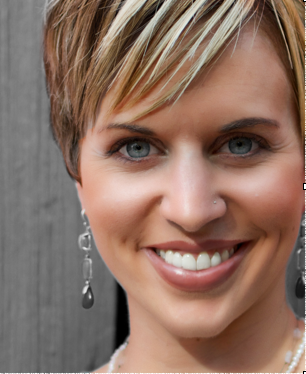 Jill Tarpey Wentworth is leading us Wednesday by Wednesday into making better food choices and being more healthful. Tune in every Wednesday to get some great recipes and advice from someone who really knows health. In an effort to fuel her passion to serve as well has enhance the lives of others through their nutritional choices, she started Eat Well SA (San Antonio). Her vision is to educate you on how to incorporate a healthy array of foods into your life. Eat Well is not a diet, nor does it embrace any one specific dietary agenda. She also offers customized programs that are educational and teach you the tools you need to maintain healthy, well-balanced eating for your busy lives.
MFA Monday!
MFA Mondays I’ve been thinking a lot about what the MFA degree means for artists in our country right now. We’re living in a world so heavily driven by capitalism that any artist struggles with the effects of commercialism and mass production values. Is it really valuable to obtain a degree in the fine arts right now? Obviously, my answer is yes but it is worth recognizing the issues and struggles artists deal with on a daily basis. I’m going to approach this from the ways I’ve dealt with financing my own art, but please feel free to comment and add any advice you may have.
“Fine” art doesn’t necessarily (or hardly ever) generate a lot of cash ![858671_563107497041148_2128003440_o-1[1]](https://www.framedance.org/wp-content/uploads/2013/08/858671_563107497041148_2128003440_o-11.jpg) flow. Artists aren’t usually creating in order to fund an end result, we are looking for an outlet of expression. Some artists are very interested in words of our critics and ticket sales, and some are not. It just depends on what kind of work you are making and why you’re making the work. Certainly the MFA program will give you a good bit of help in both of those directions. The feedback I received from my peers and professors in my choreography classes pretty much spanned the entire spectrum, ranging from questions of how the eyes were directed to asking questions directly to the dance, not me the choreographer (thank you Larry Lavender!) I found that considering my work through these multiple lenses was extremely valuable and gave me much more information about what kind of artist I am.
flow. Artists aren’t usually creating in order to fund an end result, we are looking for an outlet of expression. Some artists are very interested in words of our critics and ticket sales, and some are not. It just depends on what kind of work you are making and why you’re making the work. Certainly the MFA program will give you a good bit of help in both of those directions. The feedback I received from my peers and professors in my choreography classes pretty much spanned the entire spectrum, ranging from questions of how the eyes were directed to asking questions directly to the dance, not me the choreographer (thank you Larry Lavender!) I found that considering my work through these multiple lenses was extremely valuable and gave me much more information about what kind of artist I am.
However you do view your art, if you can find a position at a University that supports creative work as research, you will probably find that funding opportunities are available for travel to conferences, festivals, performances, or wherever it is you decide to take your art. Of course, value is placed on adjudicated works, so when you are competing against other faculty for travel grants, it is important to consider. If full-time faculty work isn’t your cup of tea, it is possible to receive grant money, but it is becoming increasingly more difficult. Individual artists are mostly ineligible to receive grants from most agencies nowadays, you must be affiliated with a nonprofit corporation and an element of community outreach is becoming almost a requirement, with a few exceptions. This is great news for our youth and our communities as it strengthens our audiences and community appreciation for what we do, though it adds one more thing that gets in the way of just making the art. For anyone considering the MFA (or any artists in the field) I would highly recommend taking coursework in arts administration, particularly covering grant writing and non-profits. It was a course I have used time and again in working to fund my own travels and productions since I’ve left school.
For those artists that do depend on ticket sales and contributions (commercial or otherwise) the issue of creating art that is “accepted” is a very real one. The internet has made things so readily available that people can make a few clicks and have world class dancers right in front of them for free. Television has commercialized dance in a way that is boosting support for dance in a positive way, but also in a way that is confusing and misleading for many. In competitive shows like So You Think You Can Dance, audiences see brilliant dancers perform short dances (2-3 minutes) that tell entire stories on high production budgets and they can understand them! It’s not really SYTYCD’s fault – its commercialism as a whole. We get blasted everyday the same – ads, music, tv shows. Its simplified and you understand exactly what you’re supposed to. This makes things incredibly difficult for the abstract artists who aren’t always making art specifically “about” something, thus causing problems when we do get people in seats and they expect to see what they saw on television. I’m not saying there isn’t merit to what the choreographers and dancers do on SYTYCD, because they truly are amazing at creating captivating, well performed, well rehearsed dances in one week for two minutes. It is making our jobs a little more difficult to feel that we have the freedom to say what we want to say in more time and with much less money.
Sarah Wildes Arnett is Founder/Artistic Director of SWADanceCollective and Assistant Professor of Dance at Valdosta State University in Georgia. She received a Master of Fine Arts in Dance Choreography at the University of North Carolina at Greensboro in 2012 and a Bachelor of Arts in American Studies from Vanderbilt University in Nashville, Tennessee. Sarah’s interests are interdisciplinary as she enjoys integrating her talents in film-making, photography and music composition into her choreography while also expanding boundaries of genre and style. She continues to perform professionally with various companies and artists in the southeast. Most recently, she has performed and shown work at the MAD Festival (Atlanta), Alabama Dance Festival (Birmingham), NC Dance Alliance Annual Event (Greensboro) and RE:Vision by Forward Motion Theatre (NYC). http://www.swadanceco.com/
Should we have a slumber party?
UncategorizedShould we have a slumber party?
We have the exciting opportunity tomorrow MORNING, December 2, to do an online fundraising campaign where your donations are eligible to be matched dollar for dollar! Set your alarms.
The catch is, there are limited funds coming from the match, so we must donate EARLY– right at 9am CST– on December 2nd to get the full match. The match happens as soon as you donate.
You give $50, Frame Dance receives $100.
If you’re not so into the slumber party, I suggest setting an alarm, and then going to Power2Give.
We are turning 5 this year, so we made a video in celebration of our first five years, featuring a few of the Little Framers!
Warm thanks from Frame Dance. We need you to keep making art in Houston and beyond.
Lydia and the Framers
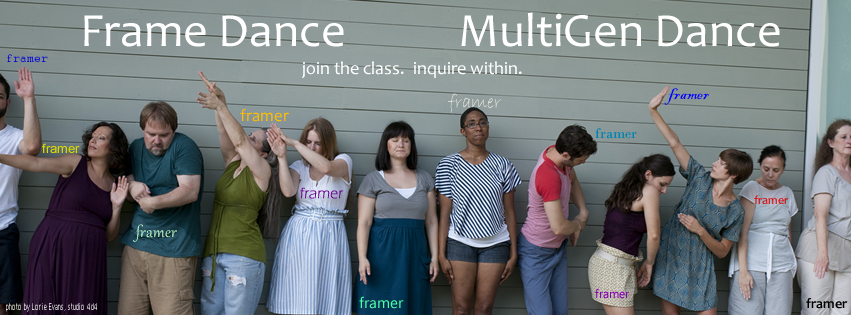
We are starting a Multi Gen dance class. All ages! We start in January, so let us know if you’re interested in enrolling or have any questions! You will have the opportunity to perform with Frame Dance in the Spring. Thursdays from 3:30-4:30.
Happy Thanksgiving!
Free Events Thursday


What are you most Thankful for this year?
Leave a comment below! 
Wellness Wednesdays: Thanksgiving Edition
Eat Well Wednesday Uncategorized

Check out this interesting article from the New York Times called:
The United States of Thanksgiving
Still looking for an easy and creative dish to make for tomorrow?
Here are 11 Healthy Thanksgiving Side Dishes great for the big Thanksgiving feast!
http://www.rd.com/slideshows/11-healthy-thanksgiving-side-dishes/#slideshow=slide4

Tuesday Tunes
Tuesday TunesTuesday Tunes: Music and Dance 
Hey, framers! We’re continuing our series about the relationships between music and dance
Have you ever wondered why we dance to music, and you would like to further understand why? This interesting article published by Time magazine explains some of the science behind our interests in the relationship between music and movement. The article involves findings from a study published in the Proceedings of the National Academy of Sciences.
If you’re interested in reading more, check it out here!
Tuesday Tunes: more awareness to those people making music!
Tuesday Tunes
Continuing our Tuesday Tunes focusing on dancers and accompanists, here’s another interesting article.
This article talks about the relationship between the accompanist and a dance teacher, including the communication that is needed for the relationship to succeed. Composer and musician Christopher Hobson, who began accompanying music when he was 17 , goes into depth about what it means to accompany dance.
Read More here
MFA Monday: Stressed about your thesis?
MFA Mondays Observations that helped me create my MFA thesis
by Amanda Diorio
It will happen.
As those of us who have worked in show business are well aware “the show must go on.” It is amazing when you think about all that needs to get done in a production like an MFA thesis concert, but miraculously it all happens. This was a helpful attitude to take when I was working on my own concert. I had no idea how all the work would get done, but I knew that somehow it would all come together. And of course it did. Remember this when you are at your wit’s end and about to freak out about not finishing your work for the show. One benefit of having a concert as a final project is that you have no choice but to get it all done. The dates have been set long in advance and cannot be changed. This is one advantage that those seeking other kinds of terminal degrees do not have. I have friends who have been working on their PhD dissertations for years. The have no specific end time so it can be drawn out. We, as performers, have the benefit of having a set date to be done by, a finish line to look towards. When you are in the thick of it and your life has consisted of this crazy schedule for years it is hard to see the light at the end of the tunnel but remember grad school is not real life. Your concert and your degree will happen. Hang in there!
The project is still a part of the learning.
While your final project is a reflection of your overall work in graduate school it is still a part of the learning process. There is this sense that Continue reading
Dancers and Accompanists
Tuesday TunesTuesday Tunes: Dance Teachers and Accompanists
While some teachers use CDs and iPods, many use live accompanists. As we know, the successful communication between accompanist and teacher is essential to the class. According to accompanist Richard Maddock, it’s the job of the musician to pay close attention while the dance teacher is marking it with their students to find the right tempo. He also says that it is important for him to pay attention to the first 8-16 bars of the exercise, so he can spend the rest of the time to get the perfect melody.
If you would like to read more about the interaction between accompanists and dancers, check out these cool articles:
Ballet accompanist equals ballet dancer in importance.
An interview with a ballet accompanist on Dance Advantage.